
Project 04 · Broadcast visual development
Mission Mars. A planet imagined before it is reached.
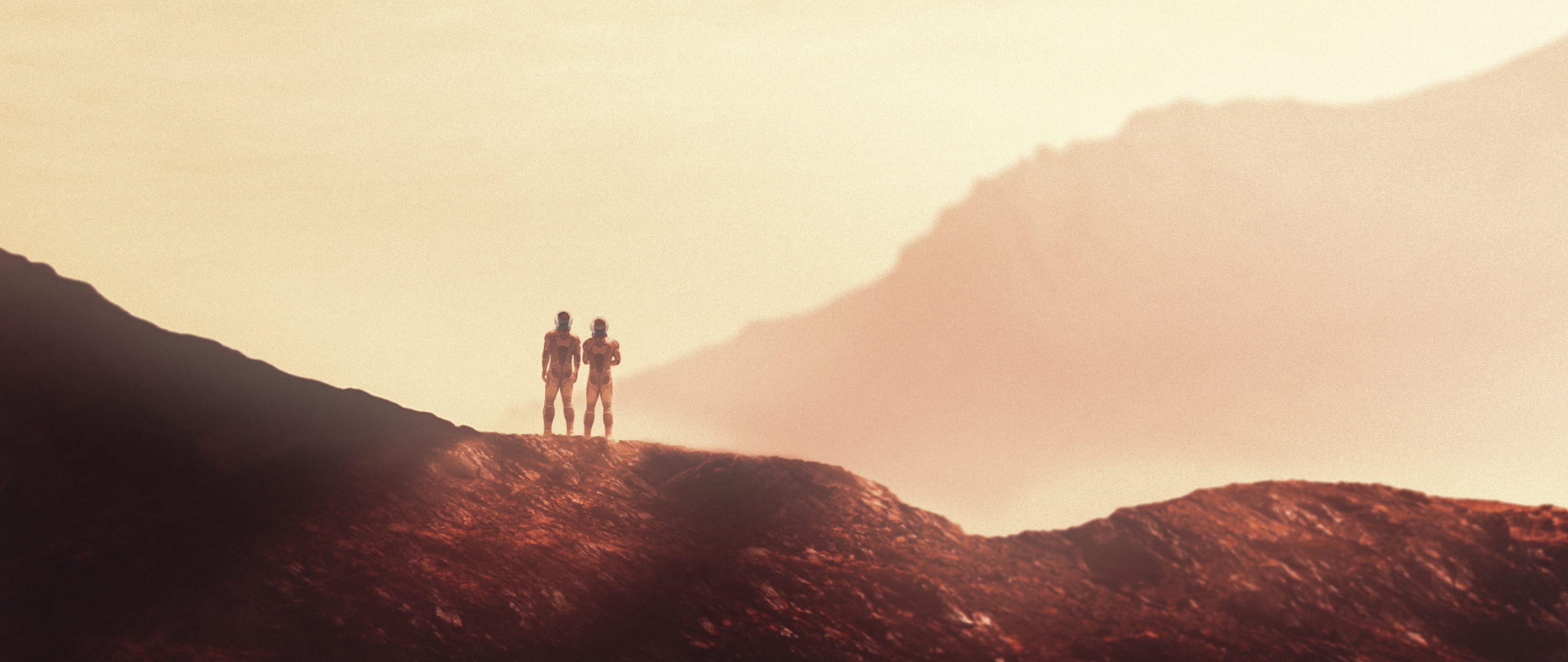
How do you make a distant planet feel emotionally close?
Developed for the BBC in collaboration with UP Creatives, Mission Mars explored a visual language for a world understood through transmitted images, scientific observation and human imagination.
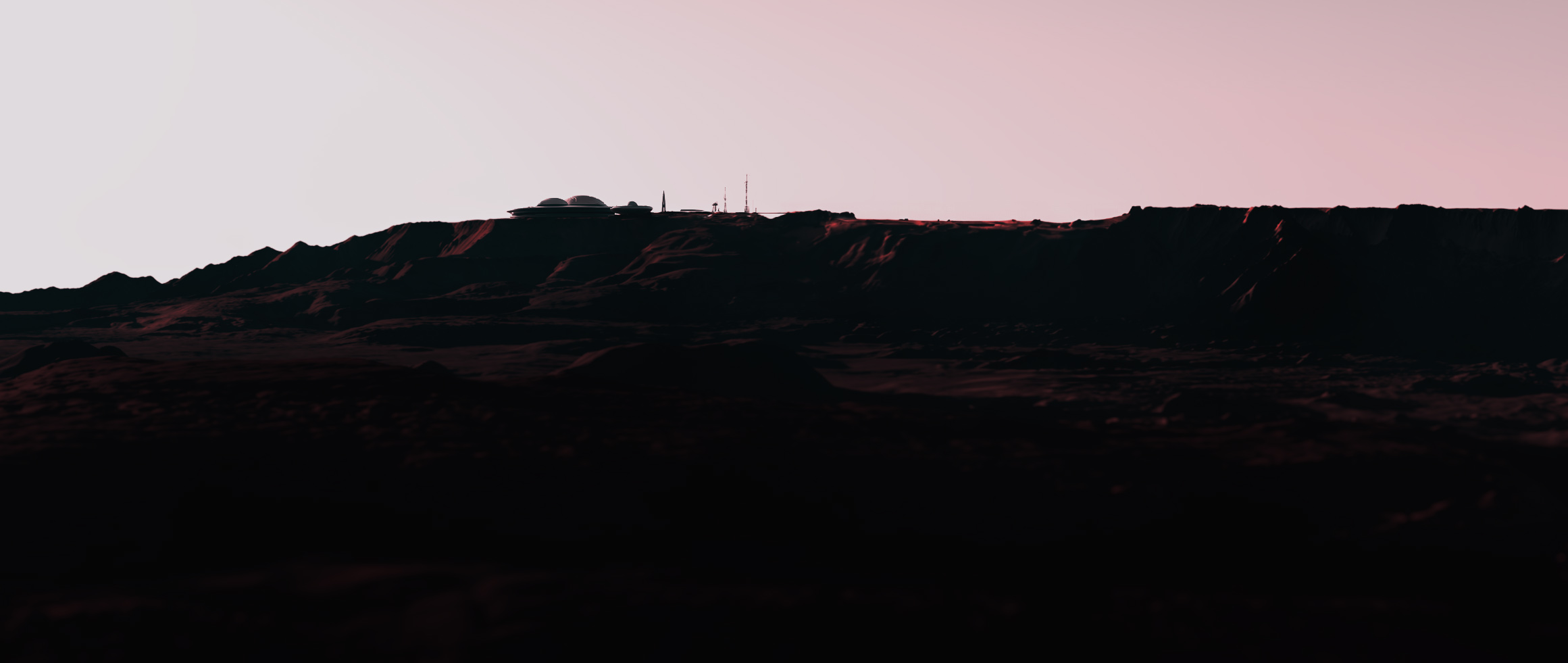
The work moves between planetary scale and intimate encounter. Vast horizons establish distance; figures and habitats provide scale; interface studies turn the landscape into something observed, measured and slowly made legible.
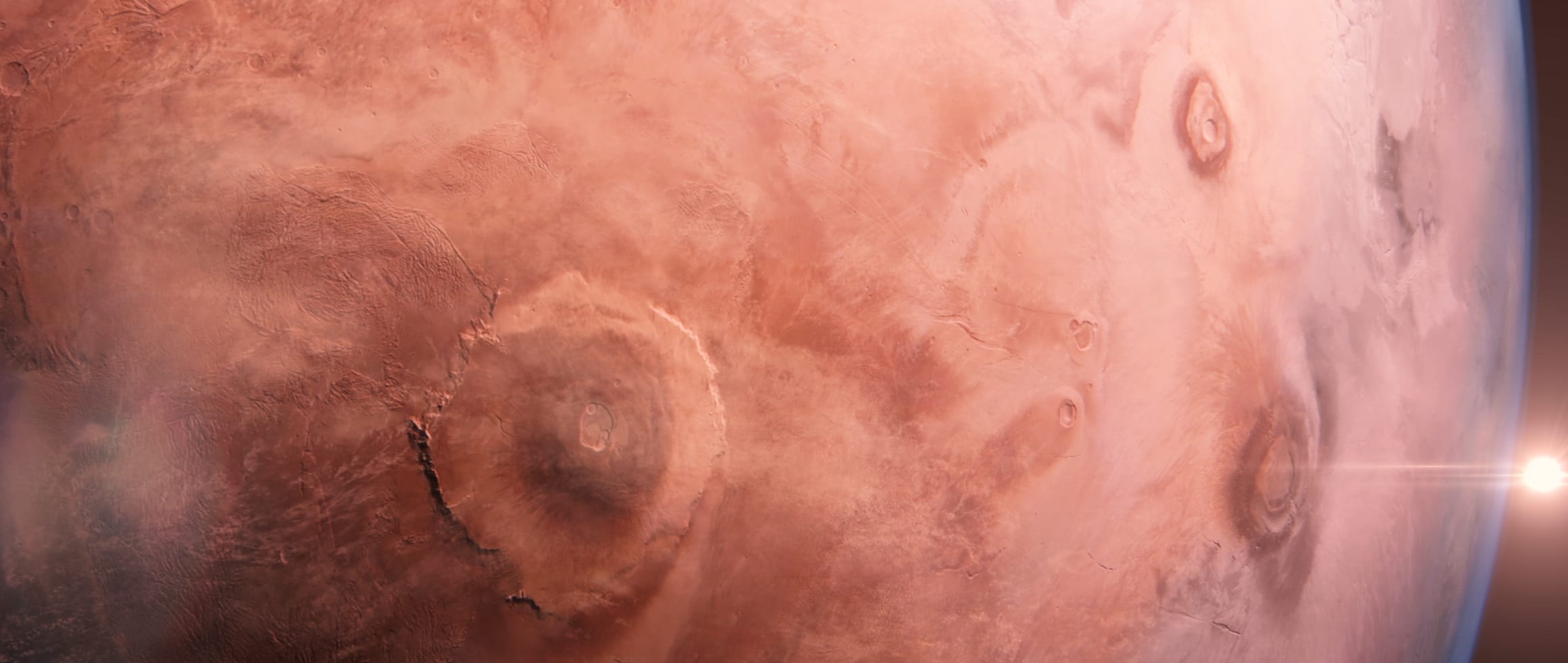
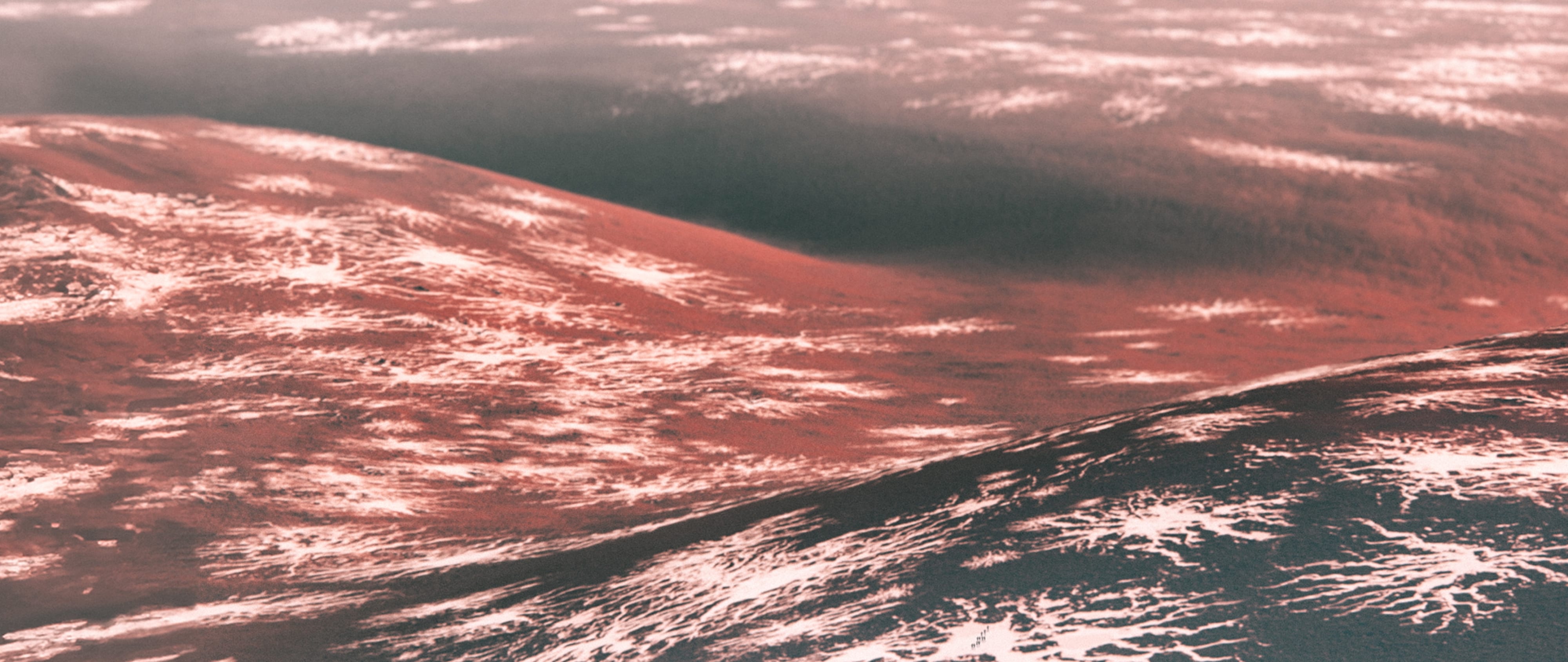
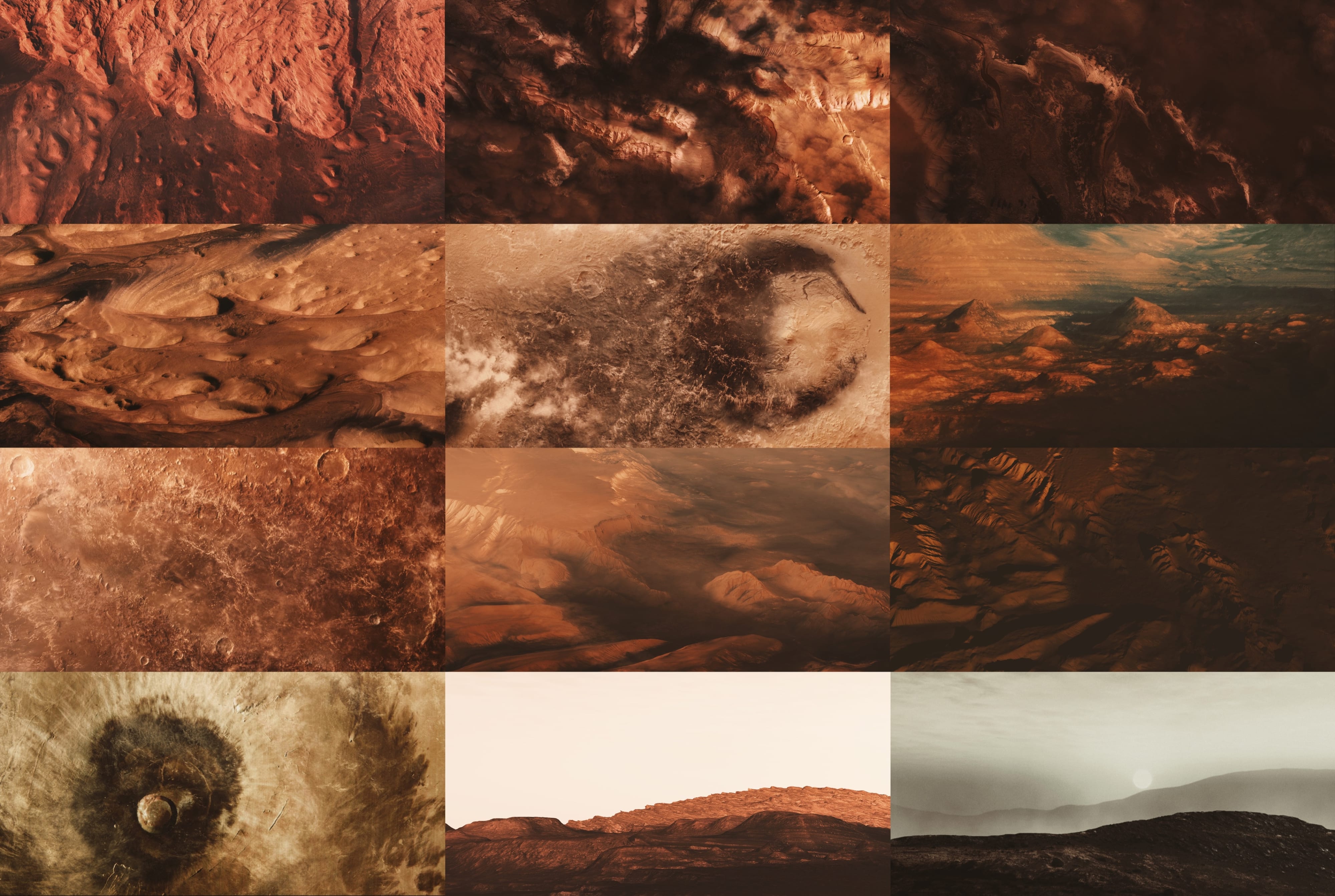
Mars is not treated as a single red surface. Pale light, mineral colour, darkness and interference create different emotional states — awe, isolation, curiosity and the possibility of contact.
Across cinematic frames, terrain studies and wider visual systems, the objective was to make the planet feel both credible and unknown: a place before it becomes familiar.
Distance.Signal.Encounter.
Phase 01 · Planet
The world before the human.
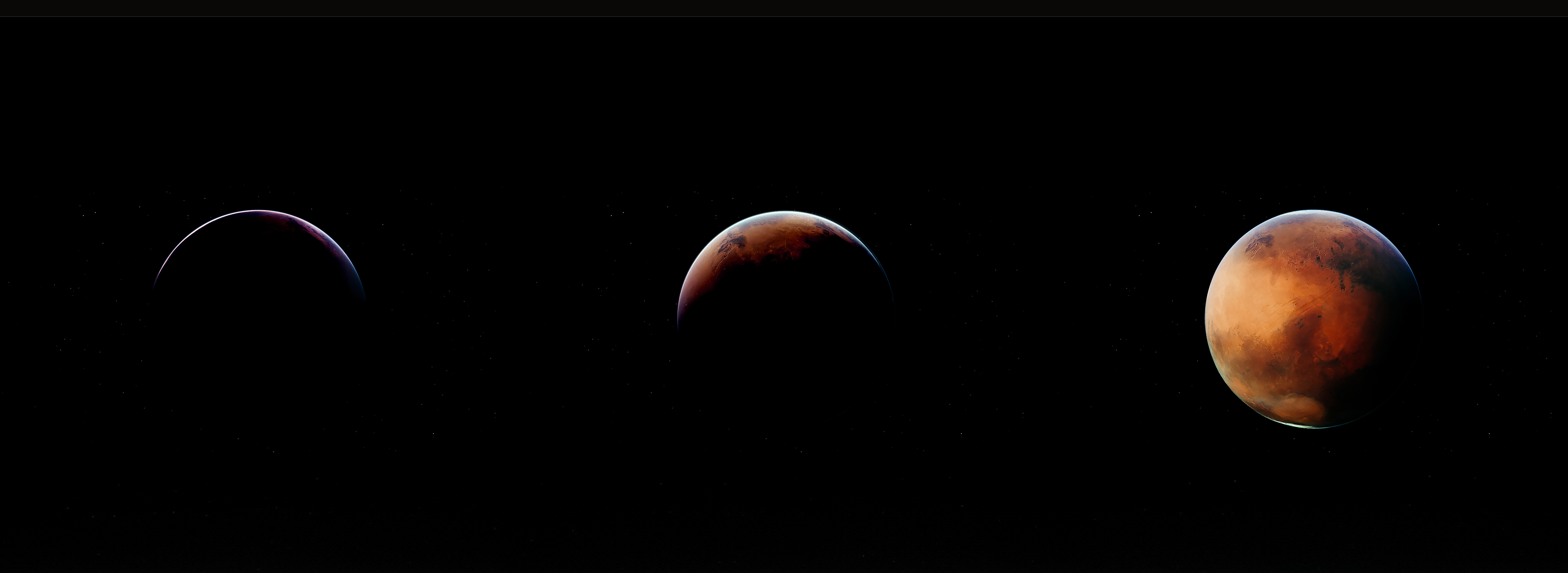
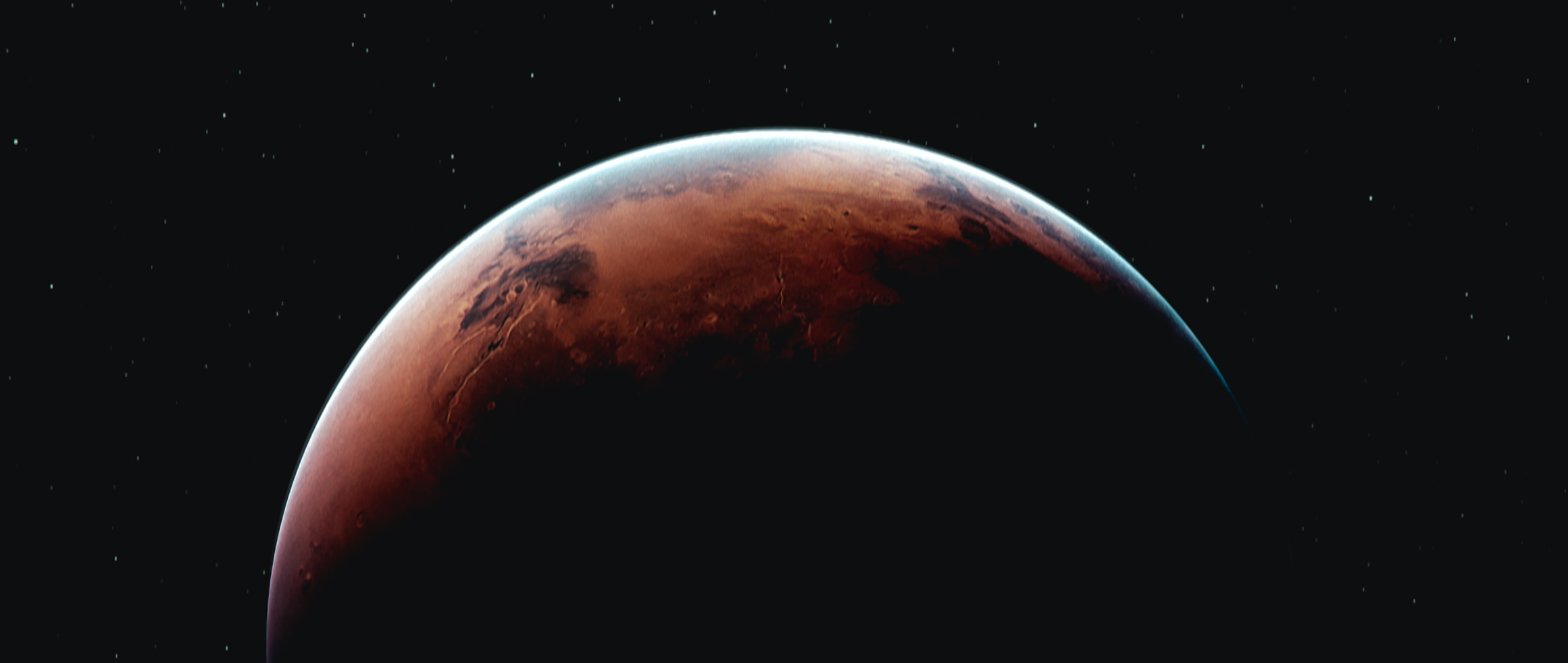
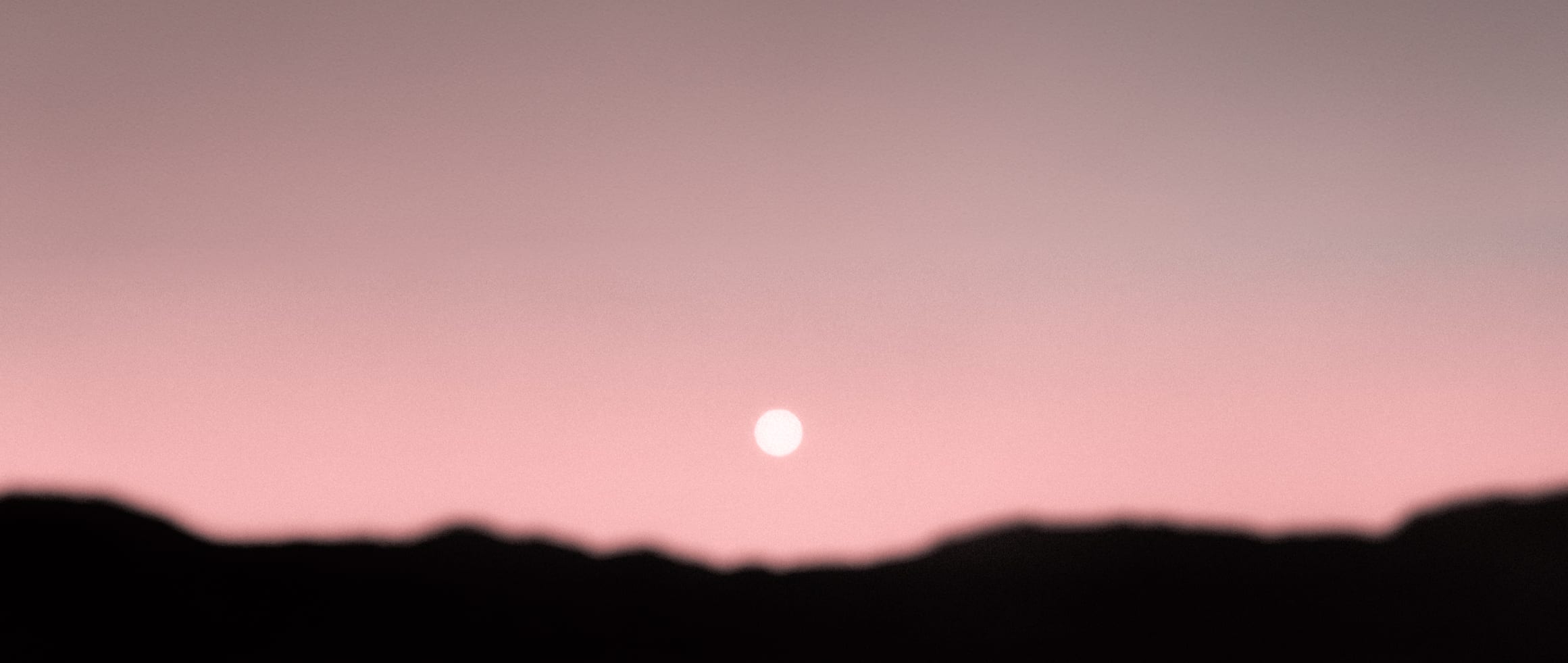
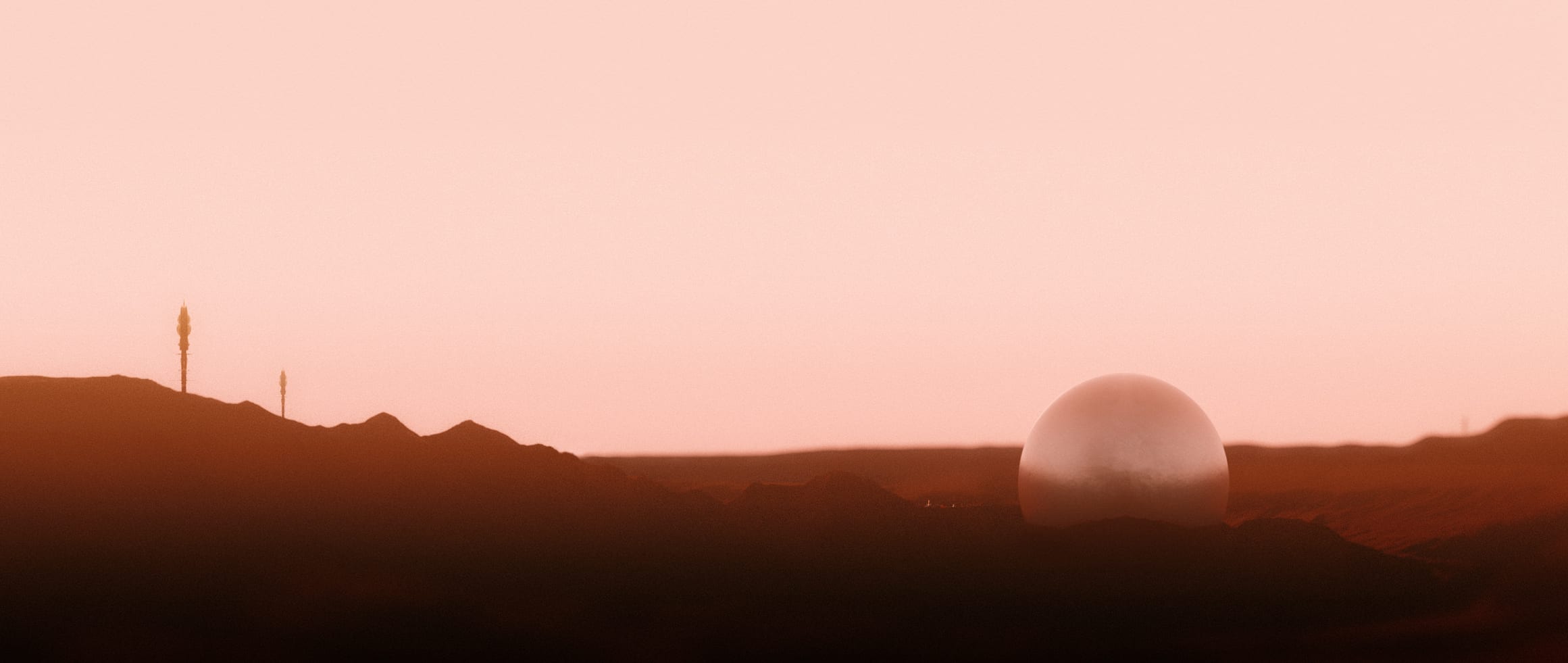
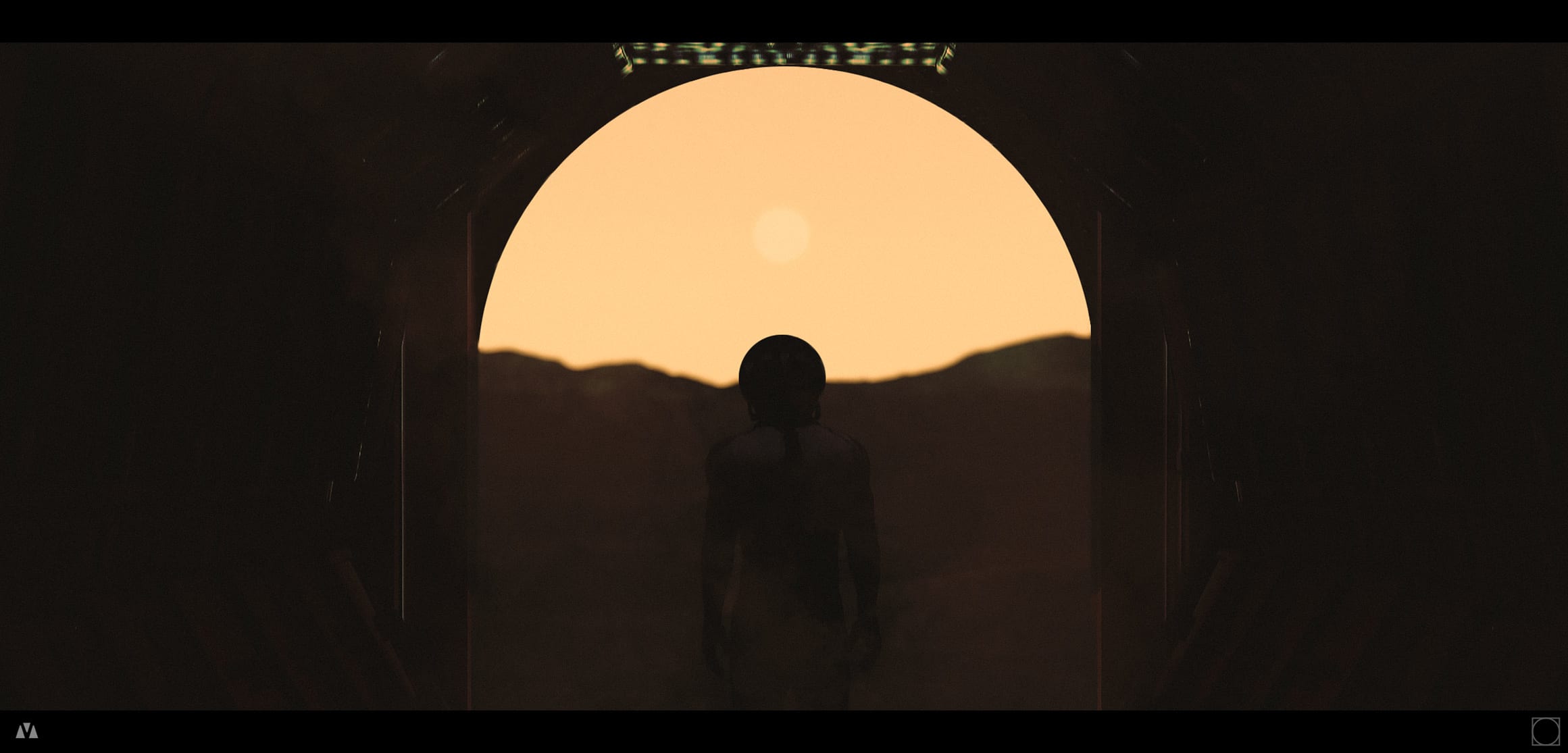
The first images build Mars as an object of attention: distant, quiet and only partially revealed. The planet is held against darkness or reduced to a narrow horizon so that scale begins with absence.
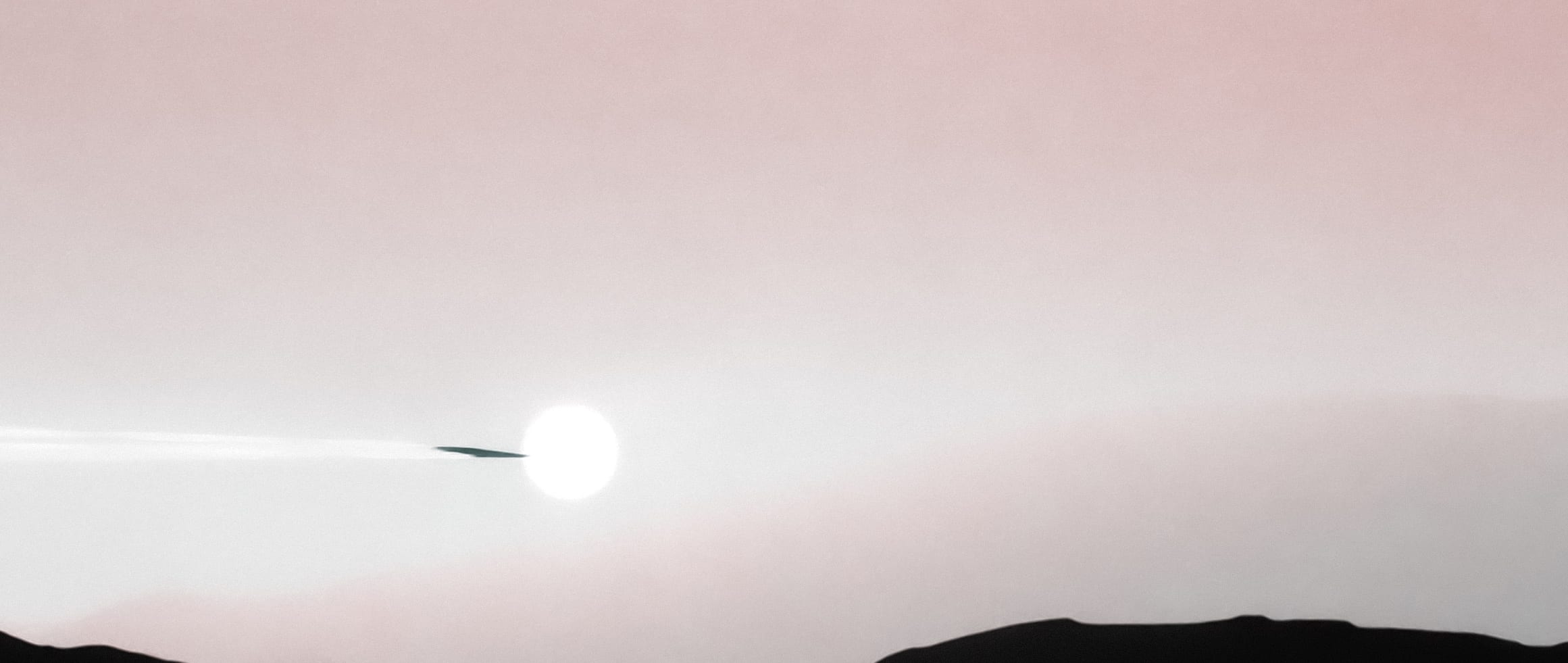
Light becomes the organising element. A sun, a rim or a pale atmospheric field gives the surface its emotional temperature before any narrative action begins.
Phase 02 · Arrival
Human scale enters the landscape.
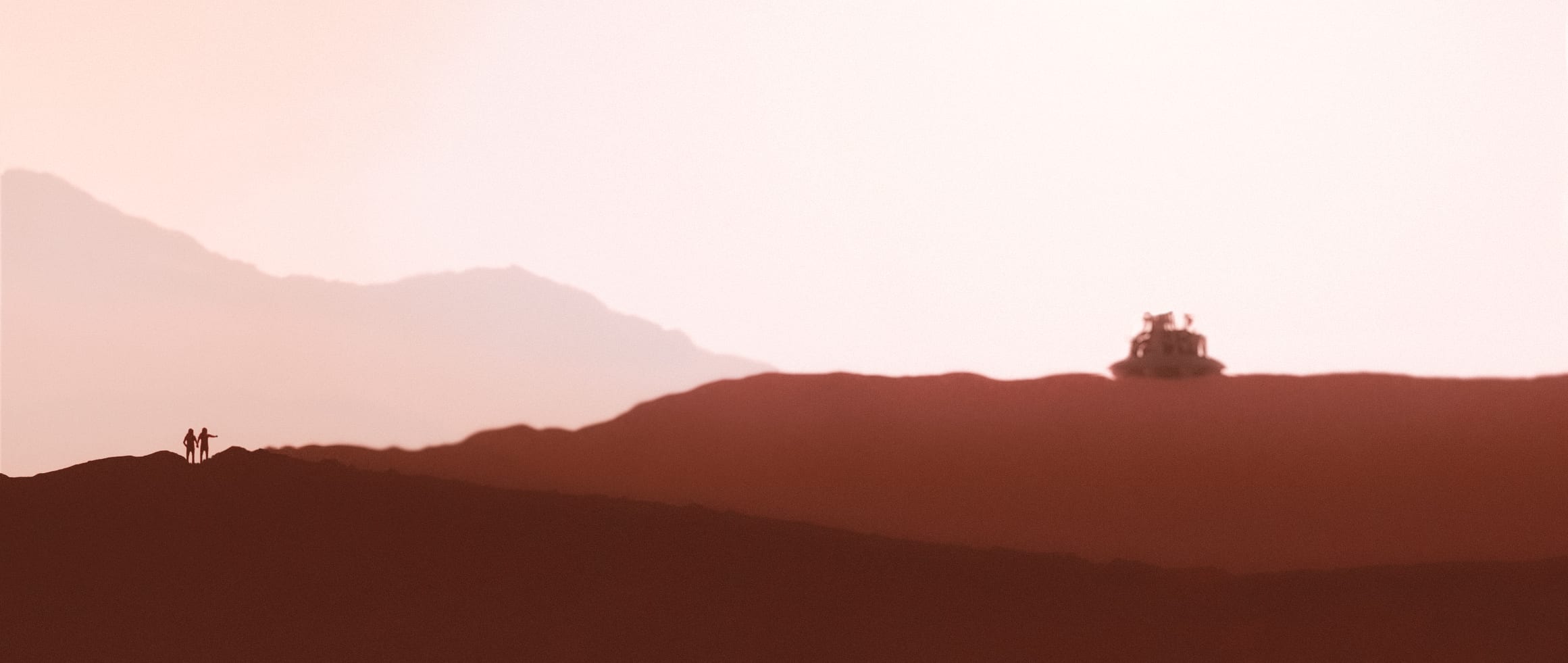
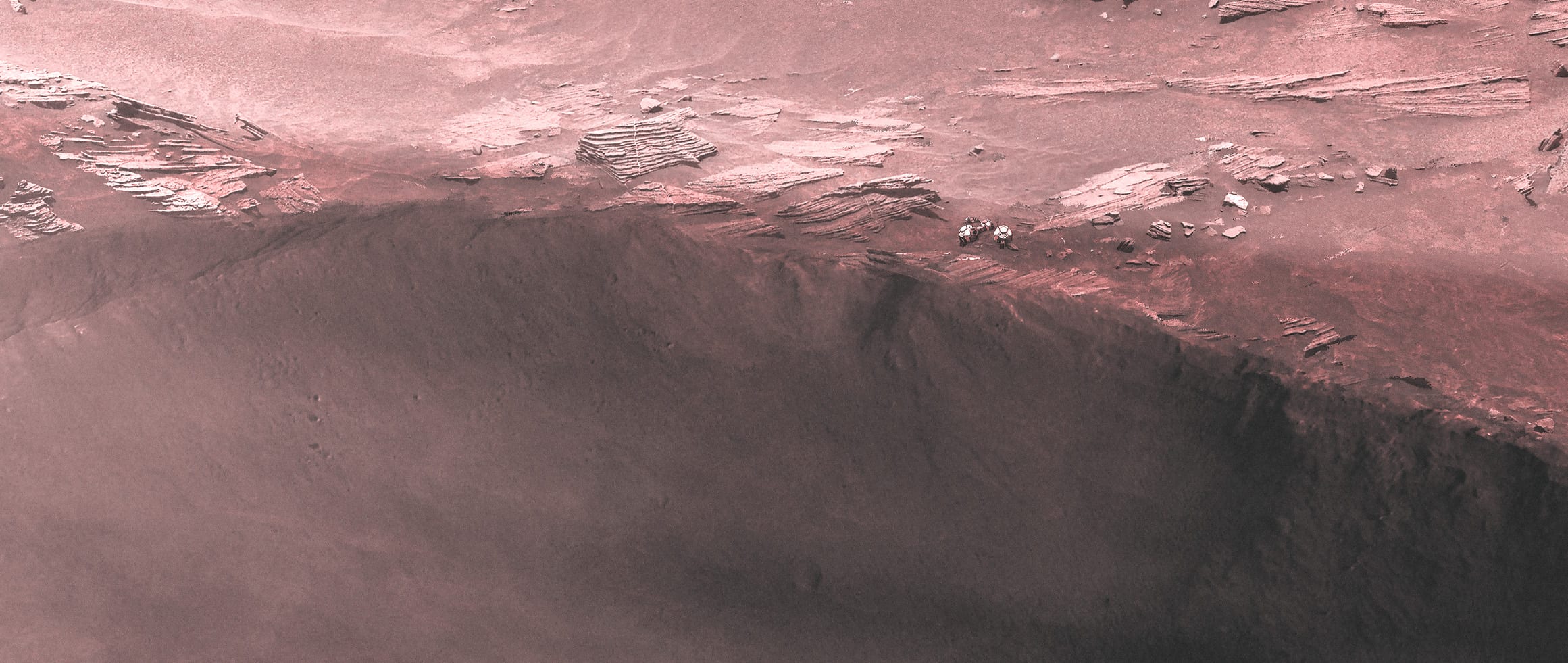
Figures are deliberately small and often pushed to the edge of the composition. Their presence changes the terrain from abstract image into a place that can be crossed, inhabited and understood.
Distance between the explorers, vehicles, habitat and horizon creates narrative tension without prescribing a single story. In one frame, two pioneers witness an old exploratory spacecraft from the era before permanent human settlement on Mars.
Phase 03 · Threshold
Observation becomes encounter.
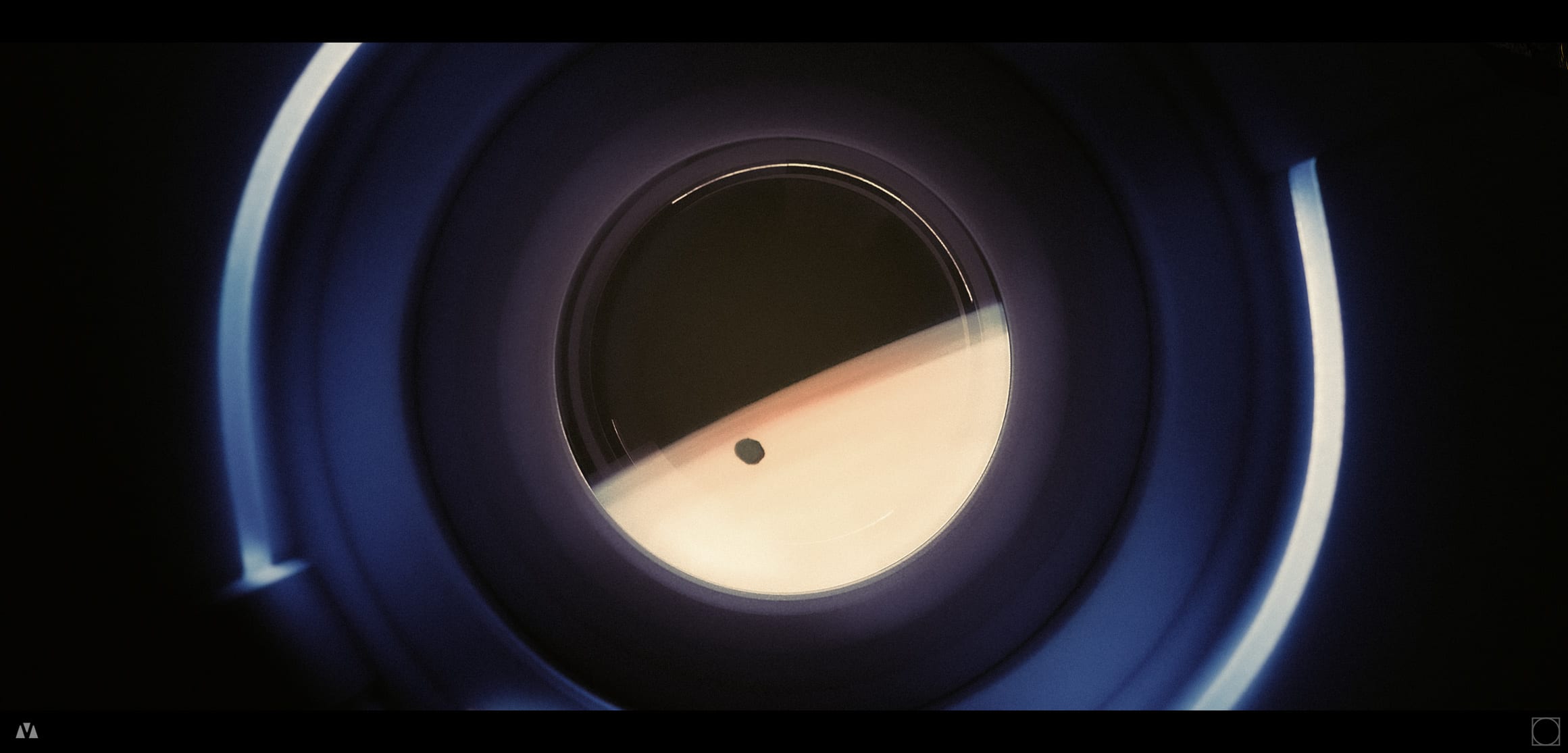
Frames within frames place the viewer between protected interior space and an exposed planetary surface. Circular apertures turn the landscape into a signal, specimen or possible point of contact.
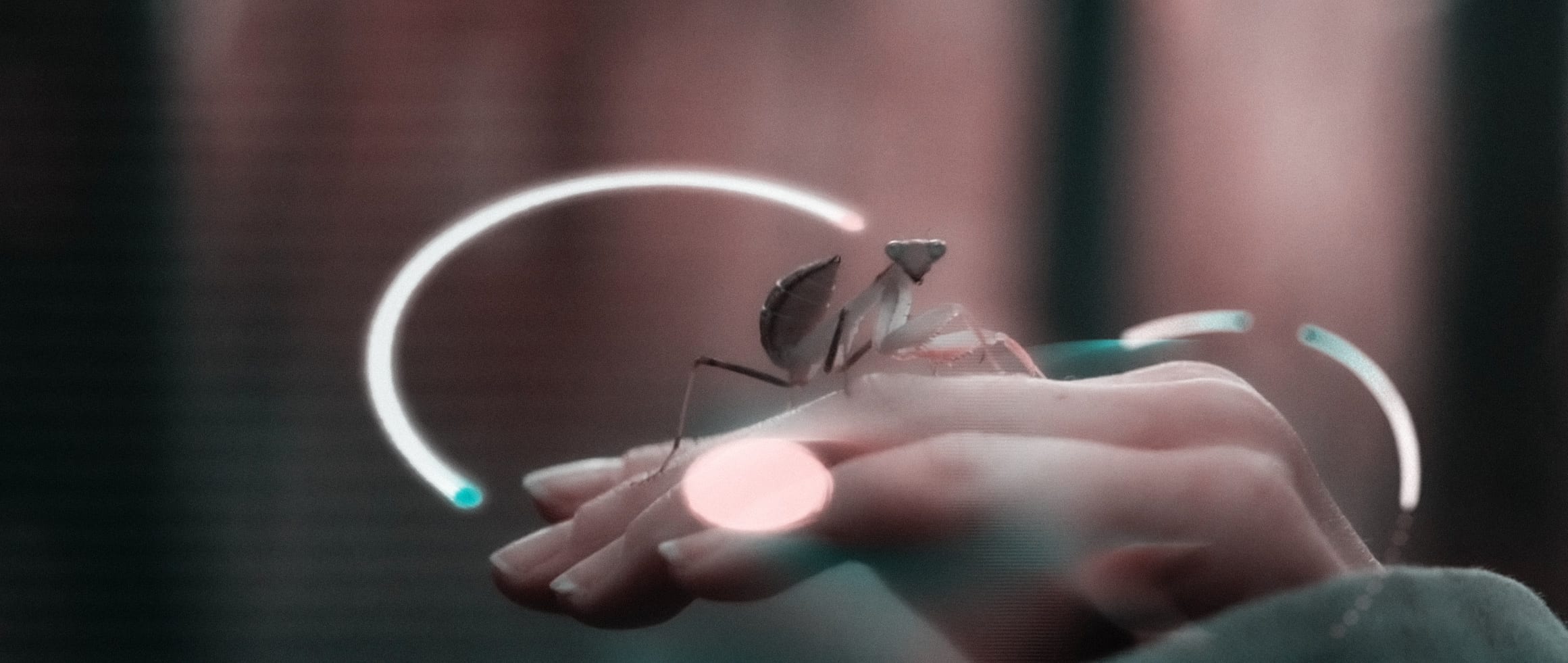
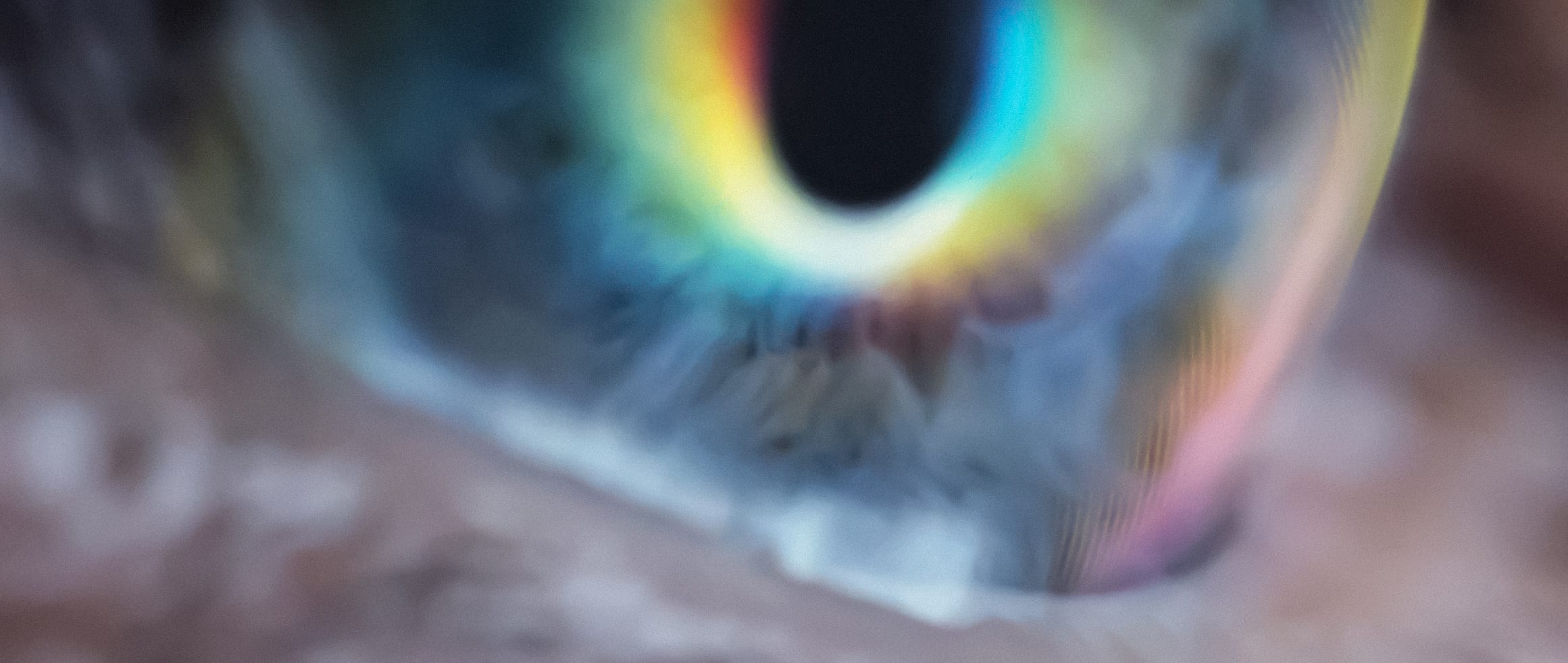
The scale contracts from planetary to physical. Holographic studies imagine an Earth-integration layer for life on Mars: familiar creatures and terrestrial experiences reintroduced through augmented reality, bringing memory, wonder and contact into an otherwise alien environment.
Phase 04 · Transit
A delivery system between worlds.
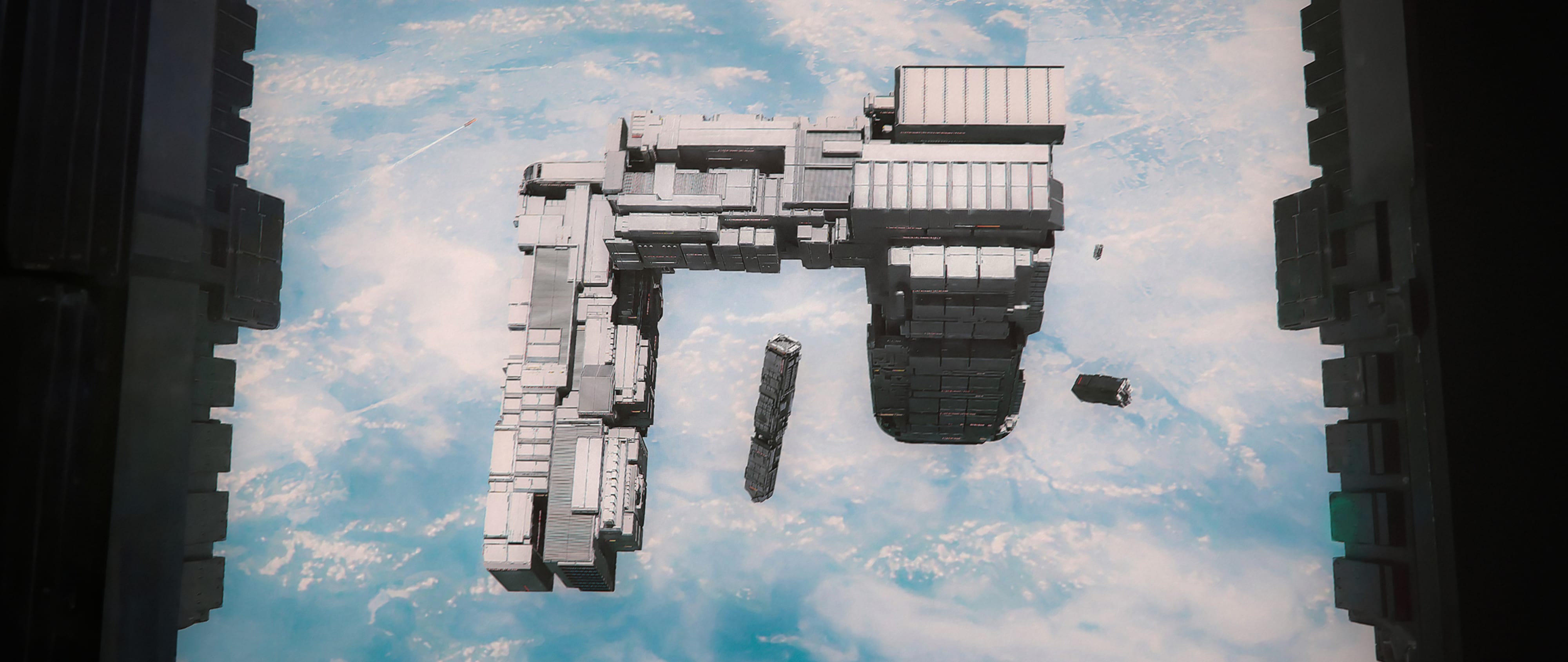
Conceived as an Earth–Mars spacecraft delivery system, the structure carries people, equipment and mission infrastructure across the distance between the two planets.
The image holds the craft against Earth at orbital scale, making transit itself part of the project’s architecture rather than simply the space between departure and arrival.
Phase 05 · Signal
The landscape becomes information.
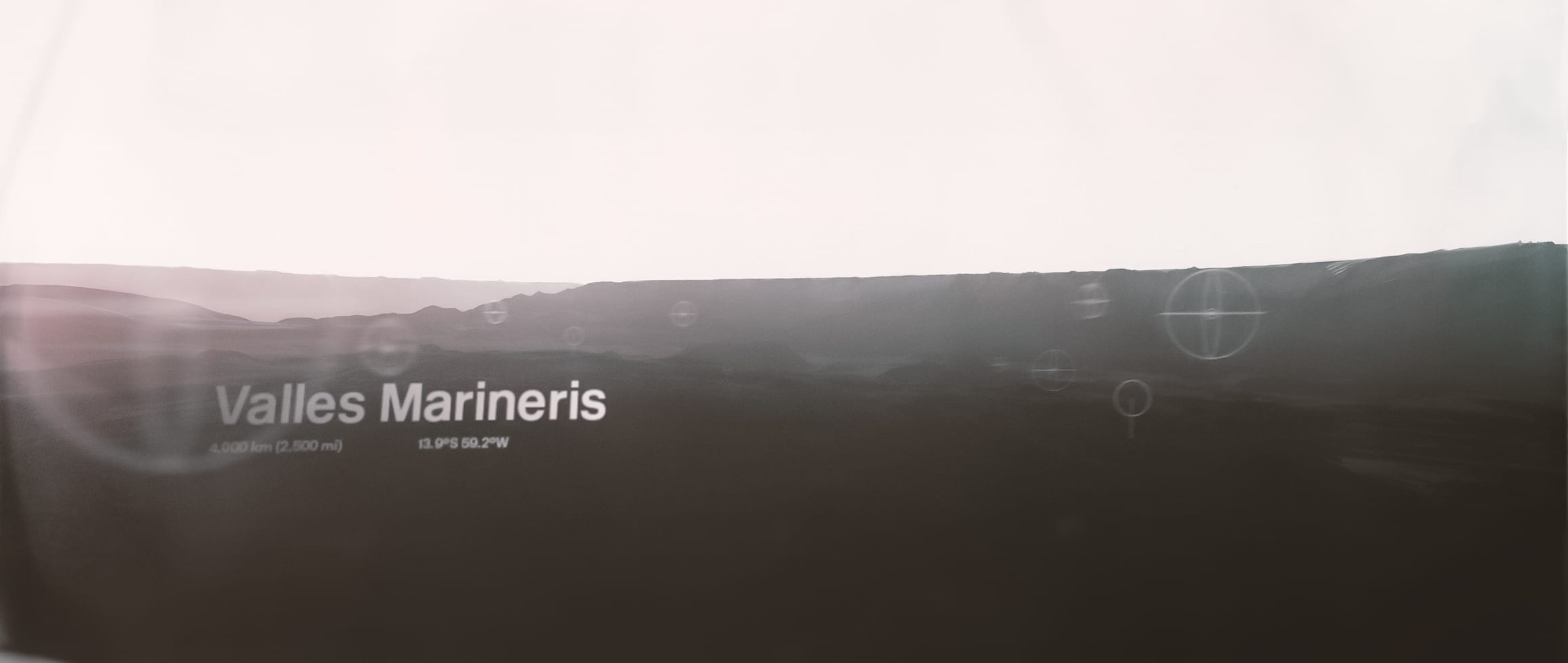
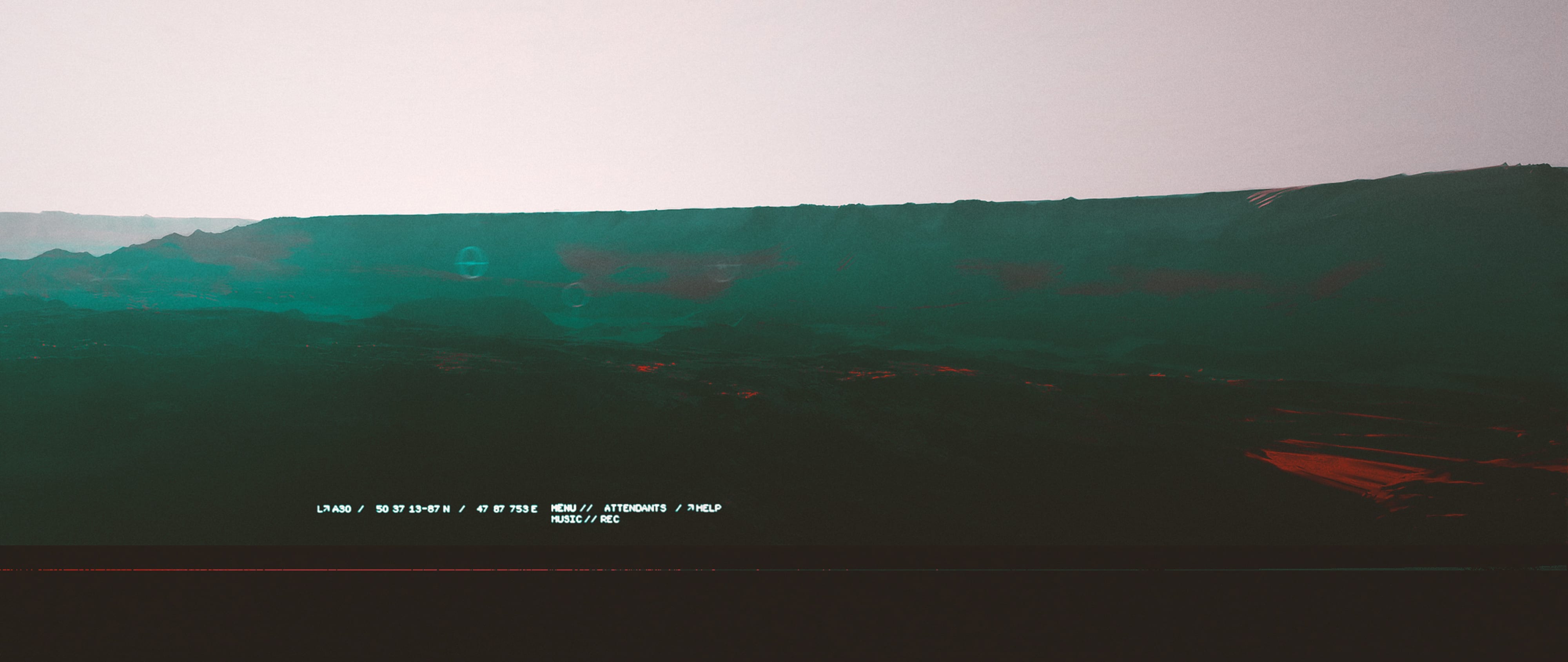
Interface studies treat scientific language as a translucent layer rather than a conventional screen. Location, coordinates and system marks hover inside the image, allowing observation and atmosphere to coexist.
Helmet UI studies test how terrain, colour and augmented overlays might be perceived in the field, turning the Martian horizon into an active layer of observation.
Phase 06 · System
A visual world built through variation.
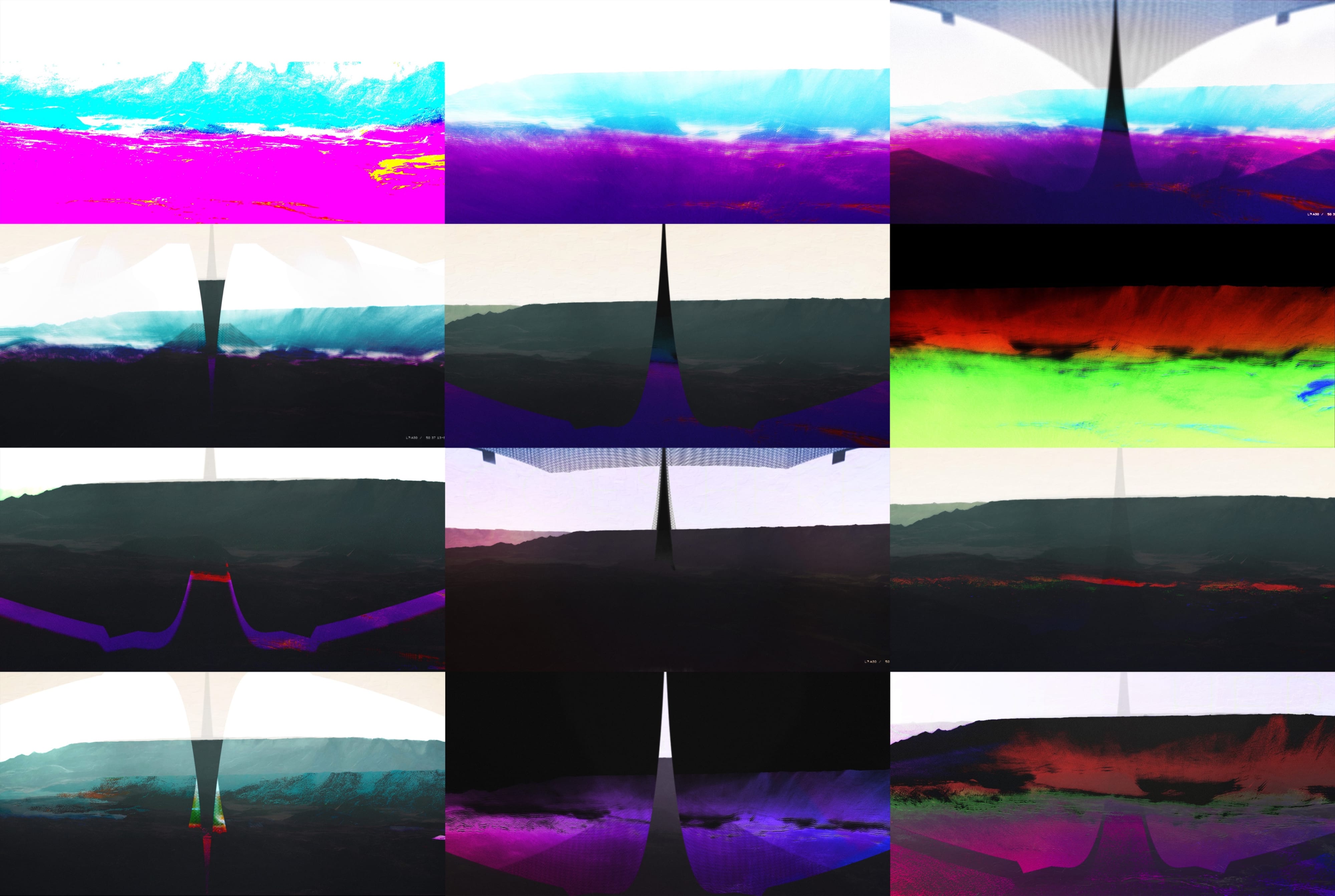
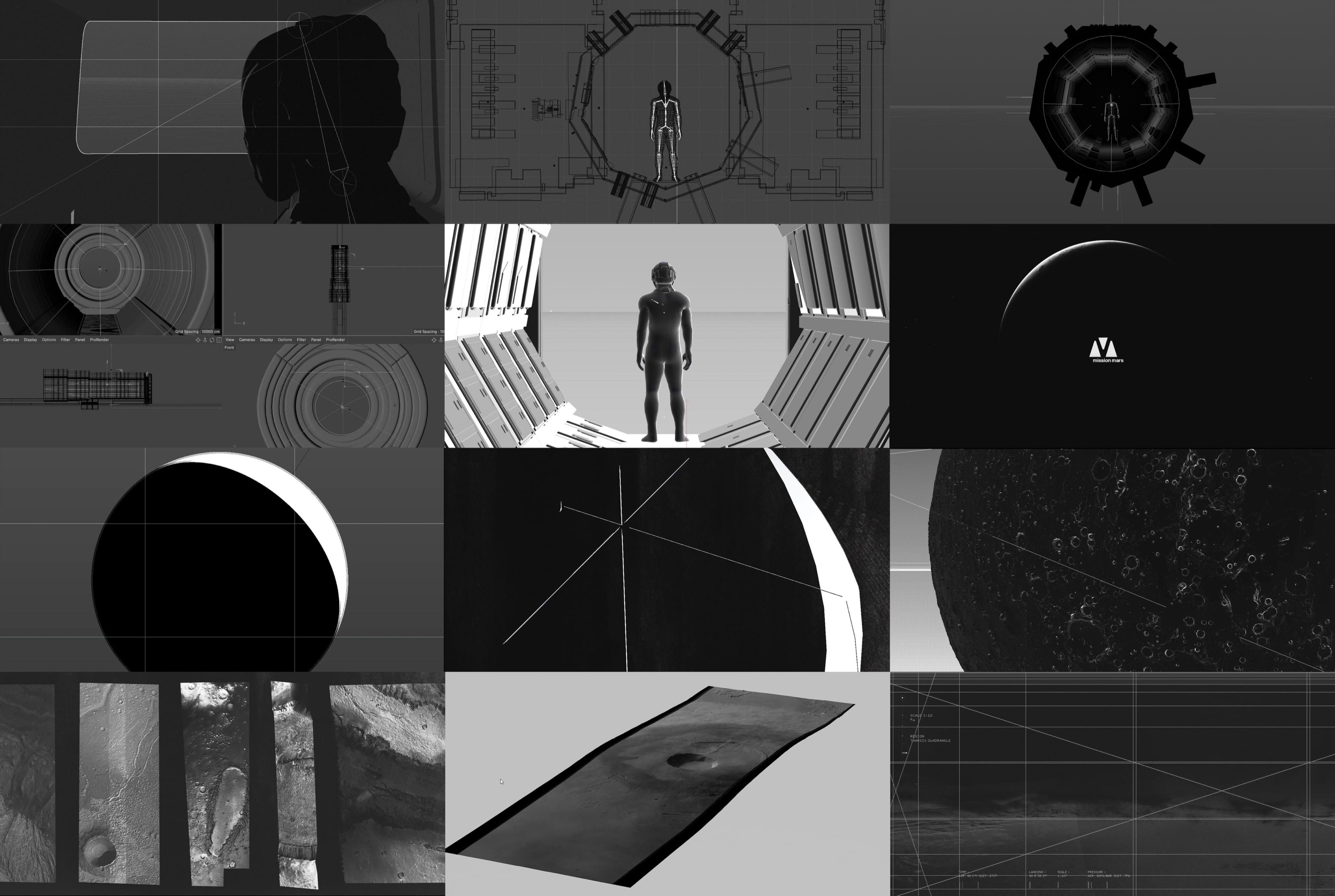
The development process tests how geography, architecture, colour and graphic information can operate as one language. Contact sheets make the decisions visible: what changes, what remains, and where an image begins to feel like part of the same world.
These studies establish a grammar rather than a single look, allowing the project to move between documentary scale, speculative narrative and graphic identity.
A planet understood first as image, then as place.
Project credits
Mission Mars
- Developed for
- BBC
- In collaboration with
- UP Creatives
- Role
- Concept Design · Visual Development